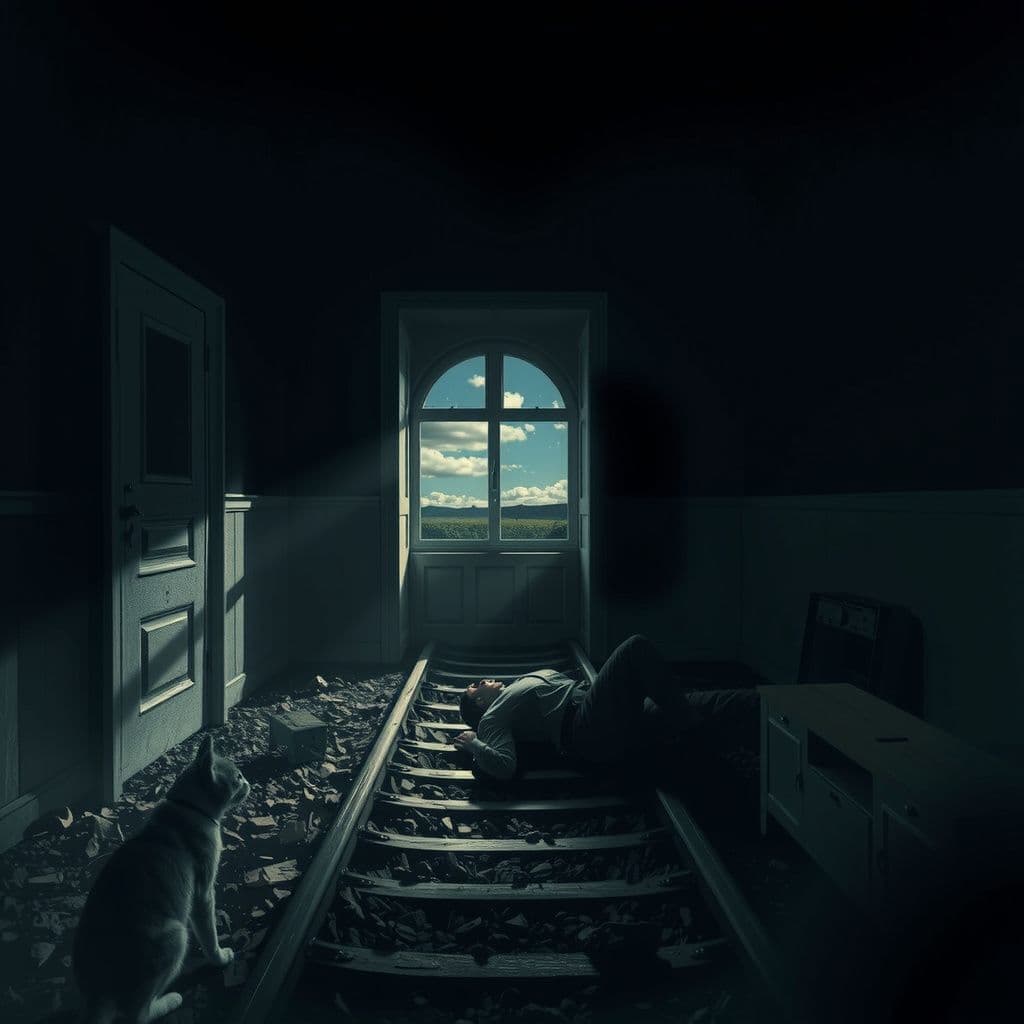
Room of bad dreams
Without the comfort of your body I have nightmares every night. I just got the lyrics to a a song, I can hear the whistle bell here’s a 20 dollar rock, lay down on the train tracks, see if you can go far. Take a $20 hit and see if I can get up before the train runs me over. I dreamed I was home. I was convinced of it. Nellie was in bed with me and I was thinking of calling my sponsor telling her the nations on the verge of collapse. We finding new ways to kill ourselves everyday. The pain is worse but I take comfort in the fact that I won’t live out my 60’s. Then I woke up to the cat humping the dog and I’m alone on the couch.
✨ AI Generated Interpretation
This dream feels like a late-night conversation with parts of yourself that are scared, tired, and a little reckless. The opening line — “Without the comfort of your body I have nightmares every night” — names a deep sense of disconnection. When the body is experienced as unavailable or unsafe, the psyche often enacts that split through vivid, alarming imagery: invitations to risky behavior, whispers of collapse, and a conviction that safety (home, loved ones) is out of reach. The repeated musical language — lyrics, a whistle bell — gives the dream a chorus-like quality, as if the same anxiety keeps playing on loop until it is heard and understood. The train tracks, the $20 hit, and the wish to test whether you can get up before the train runs you over are powerful death-and-risk symbols. From a Freudian angle they point toward a death drive — a risky flirting with oblivion — and from a Jungian perspective they represent a shadow tendency toward self-sabotage that needs acknowledgement rather than suppression. The small, specific price tag (“$20”) and the casual framing of the drug hit suggest a mix of pragmatism and resignation: danger is affordable, and danger has become normalized. Calling your sponsor in the dream is important — it is the conscious mind's recognition that help or an older wiser part exists, even when the rest of the dream is chaotic. The scene of being “home” with Nellie in bed while thinking of calling a sponsor frames an archetypal longing for refuge and intimacy. Home here functions like the Self in Jungian terms — the place where disparate parts can reunite. Nellie’s presence could represent an anima figure or an actual attachment figure, a source of warmth that the dream both clings to and fears losing. Waking to the cat humping the dog is strikingly comic and grotesque; it breaks the dream’s intensity with an absurd image that feels like the unconscious’ way of showing how libido, confusion, and boundary violations can interrupt attempts at comfort. That jarring image may also be the psyche’s darkly humorous reminder that life’s messiness keeps intruding on idealized safety. Emotionally the dream carries heavy tones: despair, numb relief at the thought of not aging, acute loneliness (sleeping on the couch alone), and a chronic background of existential dread about “the nations” and ever-new ways to harm ourselves. Taken together, the dream seems to be asking for two things: for the risky, self-destructive impulse to be named and met (which is what the sponsor symbolizes), and for a renewed, gentle re-anchoring in the body so that nightmares lose their nightly power. The song motif suggests that art, music, or putting these themes into words could be a useful way to break the loop — not as a replacement for help but as a bridge between raw feeling and a trusted support system.
See something concerning?
Report dreams that may violate our public sharing rules.
Review our Community Guidelines for details on what can appear publicly on the site.