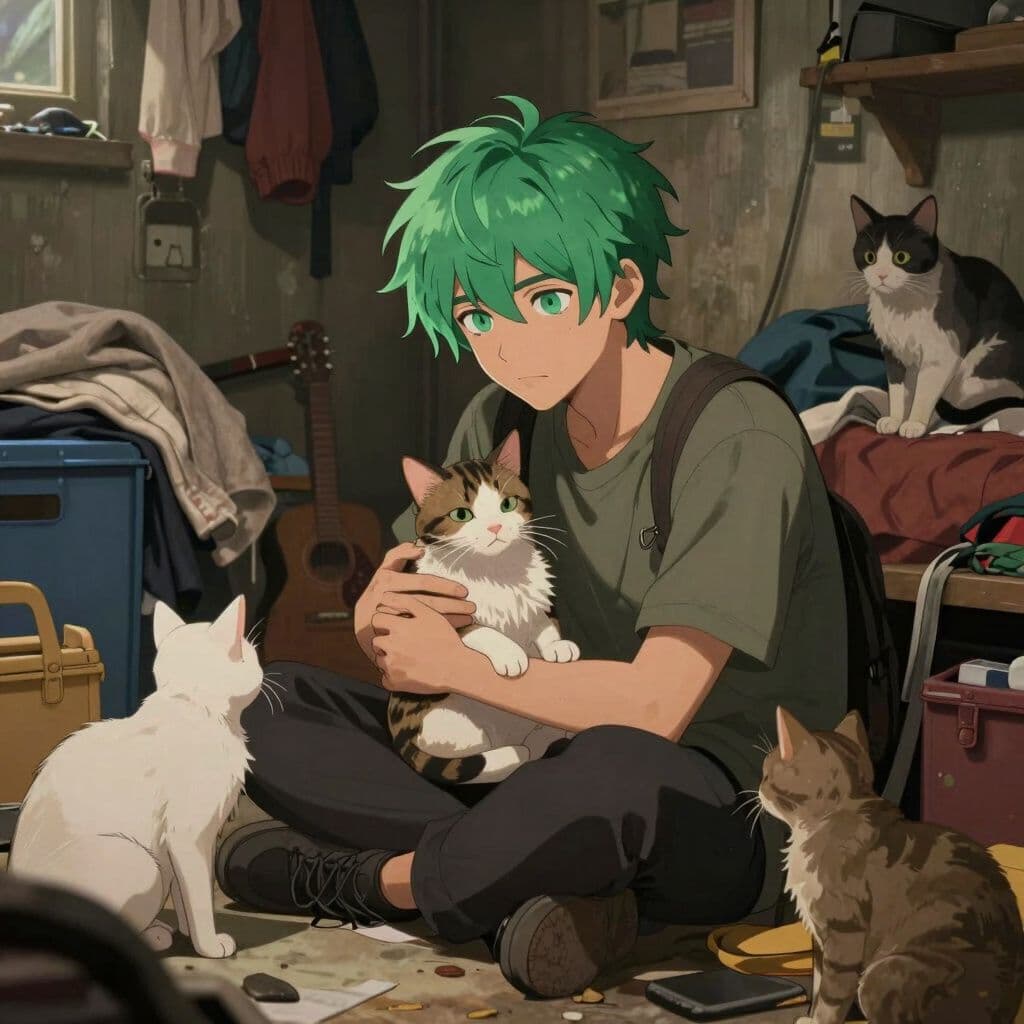
Shelter, Ias, Green Hair
I was living in a homeless shelter, my brother Ias was there. His hair was green and it made his eyes look pale green. My berth was cluttered with cats and girls. Ias was working and he took Derricks 2 pounds of hamburger to make for lunch. Next dream I was a topless dancer I was a little worried about my weight but the accessors looked at my breasts and said they were perfect that you could see the vessels in my areolas and that meant they’d be good (sensitive) for pricking. We were all wearing costumes that covered our butts, bellies and torsos but left our breasts free for viewing.
✨ AI Generated Interpretation
Your dream moves between two intense scenes that together sketch a landscape of vulnerability, shifting roles, and questions about who protects you and who gets to see you. The homeless shelter is a strong image of temporary refuge and exposure at once: a place meant to keep you safe that also signals instability and dependence. Having your brother Ias there with green hair — a striking, unnatural marker — suggests a change in him or in how you experience him; the matching pale green eyes make him feel both familiar and altered, someone who stands out and whose appearance reshapes the tone of your inner life. The berth crowded with cats and girls reads like a saturated, intimate space where parts of femininity, independence, and attention are jostling for room; it feels comforting and cluttered, protective and porous at the same time. The detail of Ias taking Derrick’s two pounds of hamburger to make lunch brings in very ordinary, almost domestic concerns into the symbolic scene. Food here can stand for provision, care, and also for the rules about who is entitled to resources. That your brother is the one working and providing creates a dynamic of caretaker and dependent, and it raises the question of how responsibility and reciprocity play out in your waking relationships. The cats around your berth amplify themes of independence, sensuality, and private territory — creatures that are affectionate on their own terms and that may symbolize parts of yourself that resist being controlled or neatly contained. The second sequence — you as a topless dancer being evaluated — intensifies themes of exposure and objectification. The assessors’ focus on your breasts and their comment about visible vessels makes the dream sharply about sensitivity and the possibility of being harmed. Vessels suggest both vulnerability and life (they’re where feeling is palpable), and the idea that they make you “good for pricking” carries an archetypal note of being seen as useful or desirable in a way that invites pain, not tenderness. Costumes that cover everything except the breasts emphasize a selective visibility: large parts of your identity are hidden, while a particular, sexualized part is placed on display and subject to judgment. From archetypal and psychological angles, the dream brings together persona and exposure, caregiver and performer. The shelter is a threshold space — a liminal container where the ego is in transit — and the dancer role points to the social persona you wear when you’re under scrutiny. The brother as provider resonates with the caregiver archetype, but his altered appearance (green hair) hints at ambivalence about his role or at changes in how you relate to his support. Freudian imagery around breasts and sensitivity evokes early attachment and nourishment themes; Jungian thought invites you to see the cats, the crowded berth, and the dancer persona as parts of the self competing for attention and integration. If you look for waking-life echoes, consider places where you feel both seen and exposed, where certain parts of you are spotlighted while others remain hidden. The dream may be reflecting concerns about boundaries, body image, or being valued mainly for specific attributes rather than for your full personhood. It also points to relational questions around care and responsibility: who is supporting you, who do you rely on, and how safe do you actually feel with those people? Gently naming which parts of your life feel cluttered or overexposed, and asking where you need firmer boundaries or kinder appraisal, could turn this vivid dream material into a useful guide for small, compassionate changes in how you protect and reveal yourself.
See something concerning?
Report dreams that may violate our public sharing rules.
Review our Community Guidelines for details on what can appear publicly on the site.