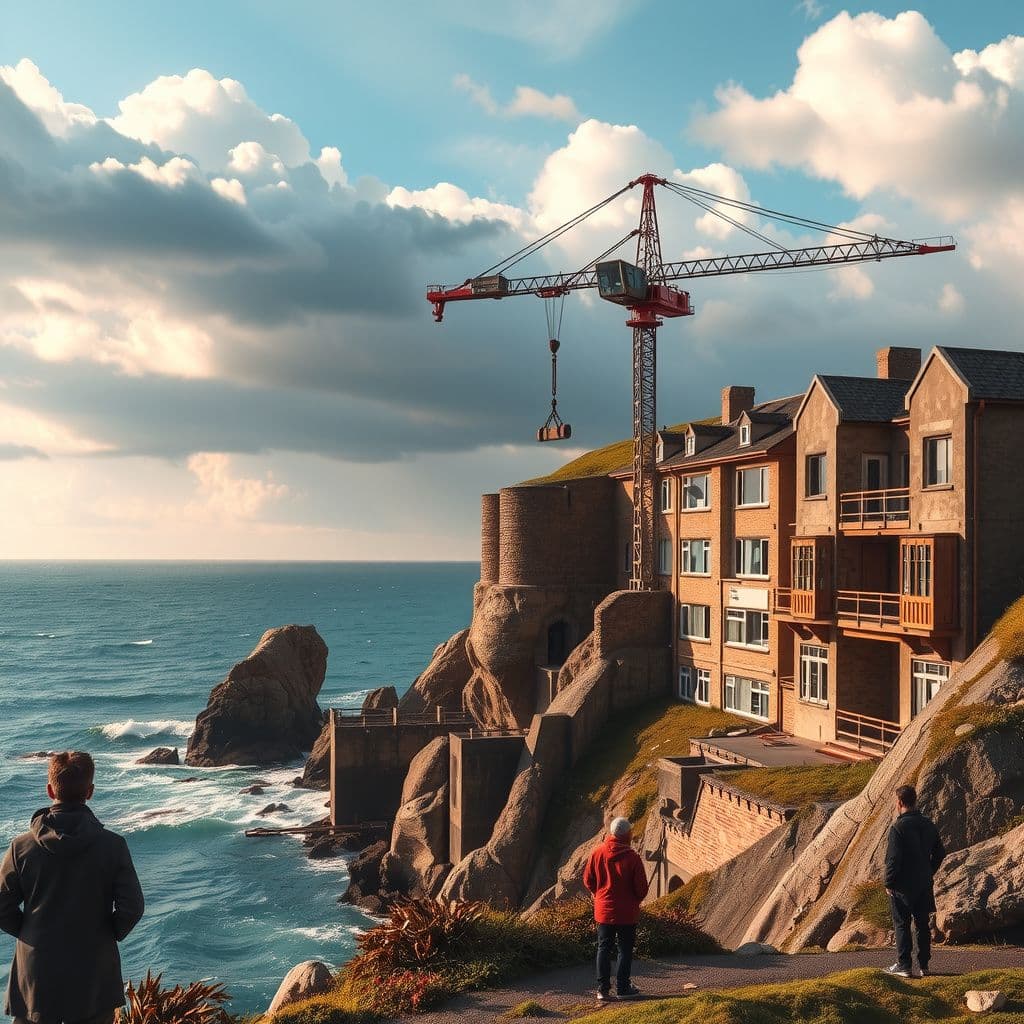
Construction site project
I'm not quite sure the purpose of this dream. I was in something like a boarding school, just as an adult. We were doing some kind of etiquette classes and I was given a project in addition to build this diorama. Diorama had to be of this construction site along the cliffside of this ocean. For whatever reason, a lot of people were interested in my design and kept trying to sabotage it. So a lot of the dream was me rushing to rebuild pieces of the construction site. I feel like I was tasked to build something but I didn't know what for and why. There's a lot of judgment going on throughout the dream and pressure finish in time. I mostly remember building this crane that lifts heavy material across the platform and over the water. Sometimes the dream would be of me just building this site, then the dream would shift to where. I was actually on a real construction site and I had to show people the specs. All my projects. The crane was apparently extremely dangerous, and I think there was a plot for somebody to fake an entry there to get me in trouble but I never saw that in my dream. Overall, just me building something with strange adults around at some weird School. At least the scenery was nice being on the cliffs of an ocean, some kind
✨ AI Generated Interpretation
Your dream centers on a strong feeling: you are in the business of building something—carefully, urgently, and under scrutiny—without being sure why it needs to be built. That combination of purposeful effort and purposelessness creates a tense emotional landscape. The boarding-school setting and etiquette classes add a performance quality to the work: you are being judged on how you present yourself and your creation. The hurry to rebuild pieces after sabotage brings in anxiety about external opposition or inner self-doubt, and the repeated reconstruction suggests persistence and resilience even when the goal or meaning feels unclear. Viewed through archetypal lenses, the crane and the construction site are rich symbols of the “builder” or “architect” aspect of the psyche—the part of you that plans, lifts heavy responsibilities, and assembles structures out of raw materials. The people who try to sabotage your diorama take on trickster or shadow roles: they may represent real individuals who undermine you, or they may be projections of a critical inner voice that tries to destabilize your work. The boarding-school adults and etiquette lessons evoke the superego or internalized authority figures: standards, social rules, and the pressure to look competent and proper while you work. The cliffs and ocean give the dream a powerful edge—literally and symbolically. In Jungian terms, the sea is often a stand-in for the unconscious: deep, changeable, and full of material that can overflow into waking life. The cliffside location creates a sense of risk and brinksmanship: you’re building on the boundary between the known and the unknown, on terrain that could feel inspiring or precarious. The crane’s function—lifting heavy materials across the platform and over water—suggests you are managing difficult emotional or practical loads and trying to bridge inner resources to outer expression. The fear that the crane is “extremely dangerous” and the hinted plot to get you blamed point to worries about consequence, responsibility, and being scapegoated for problems beyond your control. From a Freudian and modern psychological angle, the diorama and the act of building can be seen as investments of psychic energy into a self-image or life project. Making a diorama—a miniature representation—implies you are trying to prototype or present a controlled, visible version of a larger internal plan. The dream’s shifts between the imaginary diorama and a real construction site where you must show specs speak to the tension between private experimentation and public accountability: you’re testing ideas in a smaller, safer space but also anticipate being called to justify them in the real world. Practically, this dream invites gentle reflection rather than harsh conclusions. Ask yourself what projects or identities you’re currently assembling and whether you feel clear about their purpose. Notice where pressure and judgment are coming from—external critics, internalized rules, or your own impatience—and which parts of the work feel risky versus nourishing. The repetitive rebuilding is a sign of stamina; consider strategies to protect and clarify your work (setting boundaries, naming the purpose, seeking allies) and small ways to test your designs before presenting them broadly. Above all, the pleasant cliffside scenery hints that even amid scrutiny and danger there is a sense of awe and possibility—your efforts are being made on a dramatic, meaningful edge, not in barren ground.
See something concerning?
Report dreams that may violate our public sharing rules.
Review our Community Guidelines for details on what can appear publicly on the site.