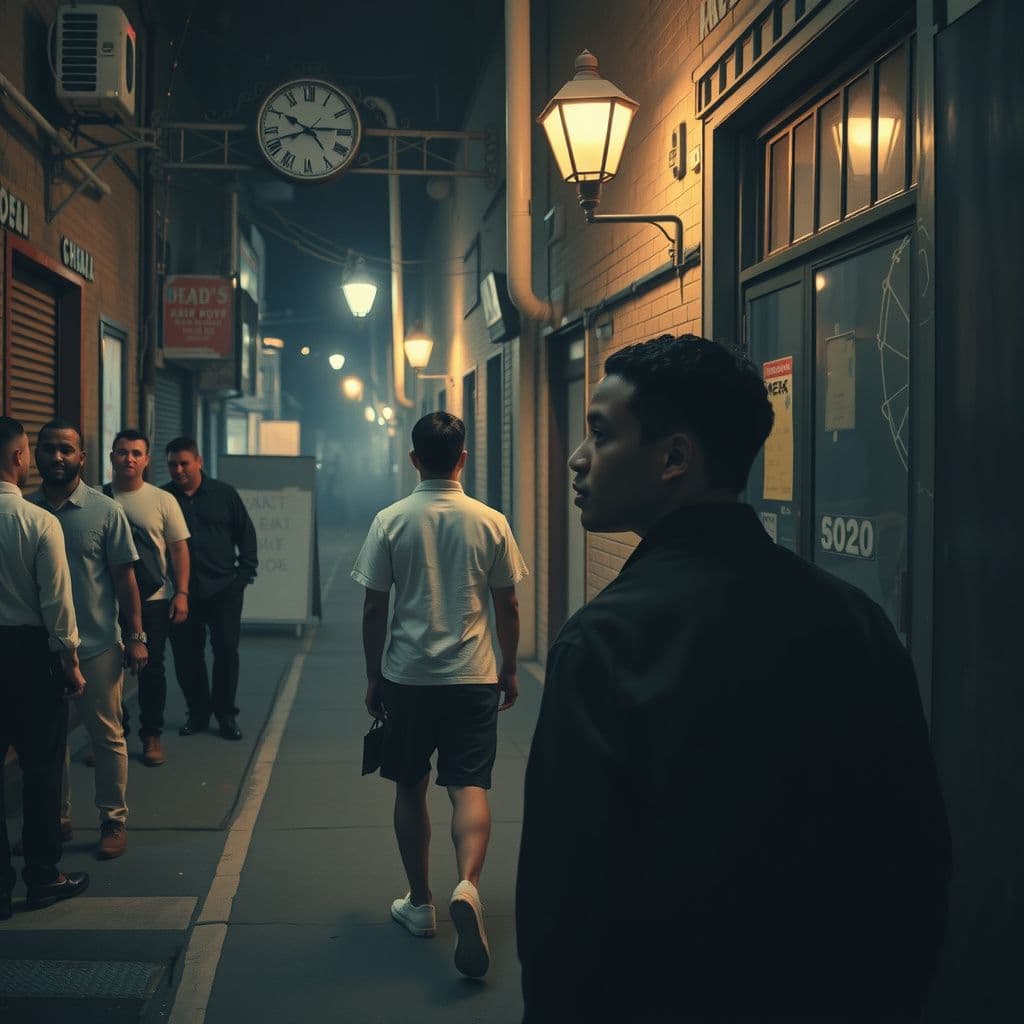
Dealers
I was with Paul and he was drunk puking drunk and I wanted to leave but he kept me around by talking about white lines and the dealer was Brandon my ex. As soon as the dope came out the empty alley at night filled with people with artistic pretensions. I walked away thinking I’ll uber home. I’ll knock on the door or sleep on the porch. The medical regime I’m on feels like using. My brain is haywire and I’m taking pills around the clock. It’s not getting me high but it feels like using. Being in an institution would be no matter they’d just have me on different meds. Last might in bed I had stabbing sensations in my hands and my back hurt so bad. The arthritis is spreading and I don’t want to see sixty. I’m nearing my benchmark.
✨ AI Generated Interpretation
Your dream sets a stark stage for an inner tug-of-war between attachment to old, messy patterns and a deep desire to leave them behind. Paul’s drunkenness and vomiting feel like a visible, chaotic version of something you’d rather not be tethered to — the spectacle of self-destruction that you recognize and want distance from. That you want to leave but are kept by talk of “white lines” suggests how conversation, nostalgia, or curiosity about an old escape route can act as a seduction that keeps you near danger. The alley at night filling with people who wear artistic pretensions reads as a social pressure scene: a crowd that offers the trappings of identity—creativity, rebellion—but perhaps lacks the grounding or sincerity you’re longing for. The dealer being your ex, Brandon, brings a personal and archetypal layer to the dream. An ex as “dealer” can symbolize something in your past that supplied relief, numbness, or identity but also took something from you. In Jungian terms, he might represent a shadow aspect — the part of life or self that traded stability for stimulation, or intimacy for escape. The way the alley populates when the dope appears points to how certain cues in waking life can quickly populate your world with people or parts of yourself that reinforce old roles. Walking away and thinking about an Uber, knocking, or sleeping on the porch are small, practical exit strategies; they are gestures of autonomy and self-preservation, even if uncertain. The strong comparison you make between your medical regimen and “using” is emotionally important. It captures a real ambivalence: medication as both help and constraint, an administered relief that nonetheless feels like surrendering control. “Pills around the clock” and a brain that feels “haywire” speak to an experience of bodily and mental regulation from the outside—an institutional logic is feared not because of the place itself but because it represents a loss of self-direction. This is a complex and valid emotional stance: relief can coexist with resentment, and safety can sit next to a sense of being medicated into a role that doesn’t feel wholly yours. Physical pain and the spreading arthritis bring mortality, vulnerability, and the erosion of agency into the foreground. The stabbing sensations in hands and the backache in the dream are vivid somatic metaphors for how your body is reminding you of limits. Saying you “don’t want to see sixty” and that you’re “nearing my benchmark” suggests anxiety about aging and unmet expectations—a feeling that time is running toward a marker you’d hoped to pass differently. Pain here is not just physical; it’s a messenger about loss, grief for capacities slipping away, and a fear of becoming dependent or diminished. Taken together, the dream invites a compassionate curiosity. It points to unresolved tensions between seeking escape and wanting home, between external control and internal agency, and between a longing for authentic creative expression and the discomfort of social facades. The porch and the idea of knocking at a door are tender images: thresholds where you can choose how and whether to enter. If you’re reflecting on this dream, gentle questions might help—Where do you still feel tethered to an old way of coping? Which parts of yourself are asking for more boundary or gentler care? What small, sovereign choices feel possible now (the porch, the knock, the Uber) that honor both safety and self-respect? A warm, nonjudgmental approach to these questions can help you reclaim autonomy without denying the real needs your medications and supports are addressing.
See something concerning?
Report dreams that may violate our public sharing rules.
Review our Community Guidelines for details on what can appear publicly on the site.